
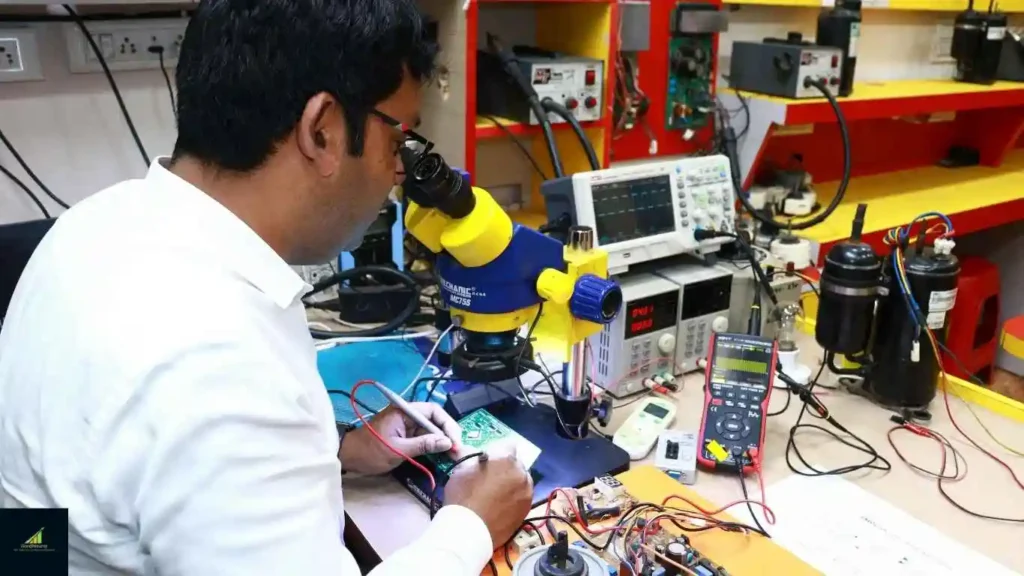
India just crossed a massive milestone in its semiconductor ambitions. Prime Minister Narendra Modi inaugurated Micron Technology’s new chip facility in Sanand, Gujarat on Saturday. This marks the first major semiconductor assembly plant to open under India’s ambitious semiconductor mission.
The facility will produce hundreds of millions of AI-ready chips annually. For investors tracking India’s tech startup ecosystem, this signals a fundamental shift. The country is moving from software services to hardware manufacturing.
Meanwhile, the broader business landscape shows mixed signals. Several major companies reported declining Q4 profits even as they announced healthy dividends.
Micron’s Gujarat Facility: What Just Happened
The Sanand facility represents a breakthrough moment for Indian manufacturing. Micron CEO Sanjay Mehrotra outlined ambitious production targets at the inauguration. The plant will convert advanced DRAM and NAND wafers into finished products.
Moreover, the facility operates as an Assembly, Test and Packaging (ATMP) unit. It won’t manufacture chips from scratch. However, it will complete the crucial final stages of chip production.
The plant will produce multiple hundreds of millions of chips per year. These chips will serve Micron’s global customer base. Additionally, many will power AI applications and data centers.
This facility received substantial government support under India’s semiconductor incentive scheme. The government approved ₹76,000 crore in incentives across multiple semiconductor projects. Micron’s plant is the first to become operational.
Why This Matters for India’s Startup Ecosystem
The semiconductor facility creates a ripple effect across India’s startup landscape. Previously, Indian hardware startups faced significant manufacturing challenges. They depended entirely on imports from Taiwan, South Korea, and China.
Therefore, local chip assembly changes the game fundamentally. Startups working on AI, robotics, and IoT devices gain access to local supply chains. This reduces costs and improves delivery timelines.
Furthermore, the facility will create thousands of high-skilled jobs. These jobs will train a new generation of semiconductor professionals. Consequently, India’s talent pool for hardware innovation expands significantly.
The timing aligns perfectly with global supply chain diversification. Companies worldwide are reducing dependence on single-country manufacturing. India positions itself as a viable alternative.
Corporate Earnings Show Mixed Picture
While Micron’s facility brings optimism, Q4 earnings reveal challenges. Several major companies reported profit declines despite revenue growth. This pattern suggests margin pressure across sectors.
ICICI Prudential Life Insurance saw profits fall 26% to ₹174 crore in Q4. The company’s Value of New Business (VNB) declined 19.45% in FY24. Nevertheless, net premium income rose to ₹14,788 crore.
The insurance giant announced a dividend despite the profit decline. Management indicated focus on growing absolute VNB in coming quarters. However, margin pressure from competition remains evident.
Tata Group Companies Face Headwinds
Tata Elxsi reported declining numbers quarter-on-quarter. Net profit fell 4.6% compared to Q3 FY24. However, the company declared a generous dividend of ₹70 per share.
Similarly, Tata Consumer Products posted a 19% profit decline to ₹217 crore. Revenue increased 8.5% to ₹3,927 crore, showing topline growth. The company announced a dividend of ₹7.75 per share.
These mixed results reflect challenging market conditions. Input costs, competitive pressure, and demand slowdowns are squeezing margins. Nevertheless, companies maintain shareholder payouts through dividends.
Startup Sector Sees Positive Movement
On the other hand, some growth stories stand out. Cyient DLM reported impressive full-year results for FY24. Profit after tax surged 93% compared to the previous year.
The company’s revenue reached ₹1,192 crore for FY24. This represents 43.2% growth compared to the same period last year. The strong performance demonstrates demand for engineering and manufacturing services.
Meanwhile, fintech startup Groww is diversifying aggressively. CEO Lalit Keshre revealed that wealth management and lending now contribute significantly. Lending alone generates around ₹232 crore annually, or 6% of revenues.
Stock and equity derivatives declined to 73% of total revenue. This indicates successful diversification away from pure broking income. For investors, this reduces concentration risk in Groww’s business model.
Regulatory Actions Impact Edtech Space
The Central Consumer Protection Authority (CCPA) fined Raising Superstars ₹8 lakh. The edtech company made misleading claims about infant development timelines. It promised outcomes like crawling at 3 months and walking at 8 months.
This action signals tighter scrutiny of startup marketing claims. Regulators are cracking down on exaggerated promises across sectors. Therefore, startups must ensure accurate, verifiable claims in their advertising.
AI Developments Shape Future Landscape

Artificial intelligence continues dominating technology discussions. Jack Dorsey, founder of Twitter and Block, issued a stark warning. He stated most companies are behind the AI curve significantly.
Block shares rose sharply after Dorsey’s comments. Markets are rewarding companies presenting AI as structural transformation, not experimentation. Dorsey predicted peers will reach similar conclusions within a year.
However, concerns about AI applications persist. Canada’s AI minister will meet OpenAI CEO Sam Altman next week. The meeting follows a school shooting in British Columbia with alleged AI connections.
In India, Justice Viswanathan warned against over-reliance on AI in legal work. He noted instances of lawyers using fictitious AI-generated citations. The message: AI is a tool requiring human oversight and judgment.
What This Means for Retail Investors
The Micron facility opening creates several investment angles. First, semiconductor equipment and materials companies may benefit. Look for Indian suppliers entering Micron’s ecosystem.
Second, hardware startups become more viable investment opportunities. Previously, manufacturing dependencies made many hardware businesses risky. Local assembly capabilities reduce this risk substantially.
Third, the government’s semiconductor push will continue. More facilities will likely receive approvals and incentives. Companies in the semiconductor value chain warrant closer attention.
However, be cautious about short-term market reactions. The facility’s impact will materialize over years, not months. Therefore, adopt a long-term perspective on semiconductor investments.
Dividend Stocks Provide Stability
Despite profit declines, established companies maintain dividend payments. Tata Elxsi, Tata Consumer, and ICICI Prudential all announced payouts. For conservative investors, this demonstrates commitment to shareholder returns.
Furthermore, companies prioritizing dividends often show mature, stable businesses. They generate sufficient cash flow despite temporary profit pressures. Nevertheless, always examine the payout ratio and sustainability.
Additionally, the mixed Q4 results suggest selective opportunities. Some sectors face headwinds while others grow rapidly. Diversification across sectors becomes crucial in this environment.
Challenges and Risks Ahead
The Micron facility faces several challenges going forward. First, global semiconductor demand remains cyclical. A downturn could impact production volumes and profitability quickly.
Second, geopolitical tensions continue affecting supply chains. Trade restrictions between major economies could disrupt operations. India must navigate these tensions carefully to maintain growth.
Third, talent availability remains a constraint. The semiconductor industry requires highly specialized skills. Building this talent pool will take significant time and investment.
Moreover, competition from established manufacturing hubs won’t disappear overnight. Taiwan, South Korea, and China have decades of experience. India must prove its competitiveness on cost, quality, and reliability.
Consumer Sector Faces Demand Pressure
The consumer sector earnings reveal ongoing demand challenges. Hindustan Unilever’s Q4 preview points to price cuts and regional competition. Slow demand growth is forcing companies to sacrifice margins.
For instance, premium products are losing market share to local alternatives. Regional brands offer similar quality at lower prices. This trend is squeezing established players across categories.
Consequently, investors should lower growth expectations for consumer stocks. Recovery will likely take several quarters as demand conditions improve. Meanwhile, focus on companies with strong pricing power and brand loyalty.
Fintech Evolution Creates New Opportunities
Groww’s diversification strategy offers important lessons. The company recognized over-dependence on broking revenue creates vulnerability. Therefore, it expanded into wealth management and lending systematically.
This approach reduces business model risk significantly. If one revenue stream weakens, others can compensate. Additionally, it increases customer lifetime value through multiple product relationships.
Other fintech startups should consider similar diversification. Relying on a single product or revenue source creates fragility. Moreover, regulatory changes can quickly impact concentrated business models.
Furthermore, the fintech sector continues attracting strong investor interest. Companies demonstrating sustainable unit economics and diversification command premium valuations. However, profitability remains the ultimate test.
What to Watch Next
Several developments warrant close monitoring in coming weeks. First, track additional semiconductor facility announcements. The government has approved multiple projects under its incentive scheme.
Second, watch Q1 FY27 earnings for demand recovery signals. Companies will provide guidance on full-year expectations. This will help assess whether current challenges are temporary or structural.
Third, monitor fintech regulations and compliance requirements. SEBI and RBI are actively updating rules for digital financial services. These changes will impact startup operations and growth strategies.
Additionally, AI adoption across sectors will accelerate rapidly. Companies successfully integrating AI may gain significant competitive advantages. However, risks around job displacement and ethical concerns will intensify.
On the global front, semiconductor supply chains continue evolving. Any major geopolitical developments could impact India’s manufacturing ambitions. Stay informed about trade policies and international relationships.
Investment Strategy Adjustments
Consider rebalancing portfolios toward companies benefiting from local manufacturing. Hardware startups, component suppliers, and testing facilities may see increased opportunities. However, maintain diversification across sectors and market caps.
For conservative investors, dividend-paying stocks provide income stability. Despite profit pressures, established companies demonstrate commitment to shareholder returns. Nevertheless, always verify dividend sustainability through cash flow analysis.
Growth investors should focus on companies with clear AI strategies. The technology is reshaping competitive dynamics across industries. Early movers with practical implementations will likely capture market share.
Moreover, keep some dry powder for market corrections. Volatility will persist given global uncertainties and sectoral challenges. Opportunities emerge when quality stocks face temporary setbacks.
Finally, avoid chasing momentum without fundamental justification. The semiconductor enthusiasm may create short-term speculation. Stick to companies with solid business models and realistic growth projections. Long-term value creation requires patience and discipline.